
Github Link
Contact
- LinkedIn: Natan Asrat
- Gmail: nathanyilmaasrat@gmail.com
- Telegram: Natan Asrat
- X: Natan Asrat Yilma
- Youtube: Natville
The Setup
Introduction
In this project, i explore the keras functional api by accomplishing tasks concerned with customizing models:
- Multiple Inputs and Outputs.
- Accessing Model Layers.
Libraries Used
- TensorFlow
- Numpy
- Pandas
- scikit-learn
Imports
import tensorflow as tf
import numpy as np
import pandas as pd
import matplotlib.pyplot as plt
from sklearn.model_selection import train_test_split
from tensorflow.keras import Input, layers
from tensorflow.keras.models import load_model, Model, Sequential
from tensorflow.keras.applications.vgg19 import preprocess_input
from tensorflow.keras.preprocessing import image
Run this if you are on Jupyter Notebook:
%matplotlib inline
Dataset
pd_dat = pd.read_csv('data/diagnosis.csv')
dataset = pd_dat.values
Build train and test data splits:
X_train, X_test, Y_train, Y_test = train_test_split(dataset[:,:6], dataset[:,6:], test_size=0.33)
Assign training and testing inputs/outputs:
temp_train, nocc_train, lumbp_train, up_train, mict_train, bis_train = np.transpose(X_train)
temp_test, nocc_test, lumbp_test, up_test, mict_test, bis_test = np.transpose(X_test)

inflam_train, nephr_train = Y_train[:, 0], Y_train[:, 1]
inflam_test, nephr_test = Y_test[:, 0], Y_test[:, 1]
The Code
Build the Model
Build the input layers:
shape_inputs = (1,)

temperature = Input(shape=shape_inputs, name="temp")
nausea_occurence = Input(shape=shape_inputs, name="nocc")
lumbar_pain = Input(shape=shape_inputs, name="lump")
urine_pushing = Input(shape=shape_inputs, name="up")
micturition_pains = Input(shape=shape_inputs, name="mict")
bis = Input(shape=shape_inputs, name="bis")
Create a list of all the inputs:
list_inputs = [temperature, nausea_occurence, lumbar_pain, urine_pushing,
               micturition_pains, bis]
Merge all input features into a single large vector:
x = layers.concatenate(list_inputs)
Use a logistic regression classifier for disease prediction:
inflammation_pred = layers.Dense(1, activation='sigmoid', name='inflam')(x)
nephritis_pred = layers.Dense(1, activation='sigmoid', name='nephr')(x)
Create a list of all the outputs:
list_outputs = [inflammation_pred, nephritis_pred]
Create the model object:
model = tf.keras.Model(inputs=list_inputs, outputs = list_outputs)
Plot the Model
tf.keras.utils.plot_model(model, 'multi_input_output_model.png', show_shapes=True)

Compile the Model
model.compile(optimizer=tf.keras.optimizers.RMSprop(1e-3),
             loss={'inflam': 'binary_crossentropy',
                   'nephr': 'binary_crossentropy'},
              metrics=['acc'],
              loss_weights=[1., 0.2]
             )
Fit the Model
Define training inputs and outputs:
inputs_train = {'temp': temp_train, 'nocc': nocc_train, 'lumbp': lumbp_train,
                'up': up_train, 'mict': mict_train, 'bis': bis_train}

outputs_train = {'inflam': inflam_train, 'nephr': nephr_train}
Train the model:
history = model.fit(inputs_train, outputs_train,
                   epochs=1000,
                   batch_size=120,
                   verbose=False)
Accessing Model Layers
Load the Pre-Trained Model
Load the VGG19 model:
vgg_model = load_model('models/Vgg19.h5')
Get the inputs, layers and display the summary:
vgg_input = vgg_model.input
vgg_layers = vgg_model.layers
Build a model that returns the layer outputs:
layer_outputs = [layer.output for layer in vgg_layers]
features = Model(inputs= vgg_input, outputs = layer_outputs)
To plot the model, use:
tf.keras.utils.plot_model(features, 'vgg199.png', show_shapes=True)
Load the Image

Preprocess the image:
img_path = 'data/cool_cat.jpg'
img = image.load_img(img_path, target_size=(224, 224))
x = image.img_to_array(img)
x = np.expand_dims(x, axis=0)
x = preprocess_input(x)
Extract the features:
extracted_features = features(x)
Visualize Features from Different Layers
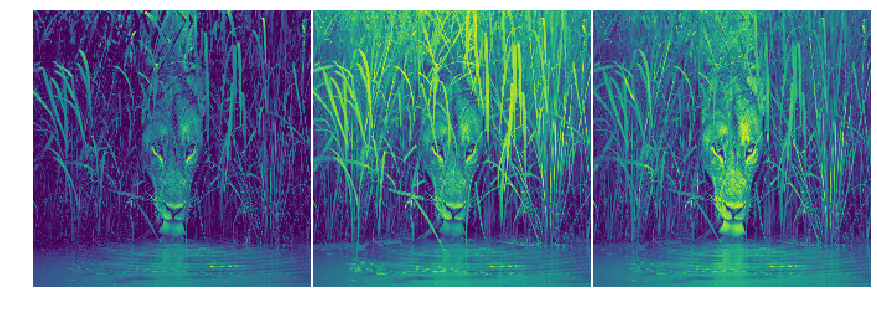
Visualise the input channels:
f1 = extracted_features[0]
print('f1.shape: ', f1.shape)
imgs = f1[0,:,:]
plt.figure(figsize=(15,15))
for n in range(3):
    ax = plt.subplot(1,3,n+1)
    plt.imshow(imgs[:,:,n])
    plt.axis('off')

plt.subplots_adjust(wspace=0.01, hspace=0.01)
Visualise some features in the first hidden layer:
f2 = extracted_features[1]
print('f1.shape: ', f2.shape)
imgs = f2[0,:,:]
plt.figure(figsize=(15,15))
for n in range(64):
    ax = plt.subplot(8,8,n+1)
    plt.imshow(imgs[:,:,n])
    plt.axis('off')

plt.subplots_adjust(wspace=0.01, hspace=0.01)

Build a model to extract features by layer name:
extracted_features_block3_pool = Model(inputs = features.input, outputs= features.get_layer('block3_pool').output)
block3_pool_features =extracted_features_block3_pool.predict(x)
Visualise some features from the extracted layer output:
imgs = block3_pool_features[0,:,:]
plt.figure(figsize=(15,15))
for n in range(64):
    ax = plt.subplot(8, 8, n+1)
    plt.imshow(imgs[:, :, n])
    plt.axis('off')
plt.subplots_adjust(wspace=0.01, hspace=0.01)
